He was the wonder from Down Under who competed in World Cup Showjumping events, formerly known as the dual city winning racehorse Man From Oz.
In the decade after he retired from racing, the son of General Nediym was an accomplished Showjumping performer.
His stellar post-race career came after the one-time middle-distance galloper last competed in August 2012.
At his final outing, he was 10th of 14 in a 1350m C6 event at Doomben under the guidance of late trainer Kelso Wood.
Man From Oz was a rising five-year-old when Queensland Off-The-Track coach Chloe Hughes purchased him for $500 in 2012.
A winner from 1350m to 1800m, Ms Hughes appreciated his staying ability, amazing work ethic and that he was the only horse she knew that “smiled”.
Her knowledge of Man From Oz, stemmed back to her time alongside the breaker who worked with the galloper.
She also rode him at the breakers and in his pre-training days.
He was a striking-looking type and even as a green horse he had great canter which was “consistent” and “adjustable”, she said.
“However, he could be tricky as he was quite a naughty colt,” Ms Hughes said with a smile.
“So, the riders often felt they had the short straw if they had to ride him because he was so sharp and quirky.”
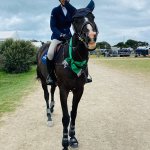
A year after Chloe bought Man From Oz, he was bought by fellow showjumper Tyrone Latham in 2013 although she remained his rider.
She was most proud of the fact, that she trained the ‘quirky’ horse to World Cup Showjumping class from scratch and to be highly competitive against so many purpose-bred Warmbloods.
It is a testament to how versatile and affordable OTT thoroughbreds can be compared to the number of zeros that usually accompany a Warmblood’s purchase price, she said.
“They are really useful and affordable horses,” Ms Hughes said.
Sadly, for Chloe, Man From Oz died in April, aged 14.
“I found him in the paddock and the vet thinks he may have had a heart attack,” she said.